Conscious {by Design}
How can we encourage the purchase of CBD wellness products? Boosting an e-commerce business by optimizing its user experience to drive more visibility and sales.
CONSCIOUS {BY DESIGN}
Jun/Jul 2022
TEAM
Deepika Magod, Justine Goik , Kasia Kaczmarek
SCOPE
User Research
UX Design
UI Design
Visual Design
E-Commerce
The project was done as a design challenge at Ironhack Bootcamp.
The Problem
Conscious {by Design} is a brand of natural CBD wellness products entering a market marked by confusion and skepticism about CBD's benefits. The existing online store failed to address the unique challenges of building trust, educating customers, and establishing a strong brand presence for a novel food product.
The chalenge
The UK’s emerging CBD market faces significant barriers, including customer skepticism and a lack of understanding about CBD’s benefits. Compounding this, competitors’ platforms often lack user-friendly design and clear messaging.
Our challenge was to craft a solution that would educate users, build trust, and seamlessly convert visitors into customers.
Approach
We began by analyzing the existing store and business objectives, followed by in-depth user research to understand the needs and concerns of CBD consumers. Using these insights, we designed a solution focused on clarity, usability, and credibility.
Device
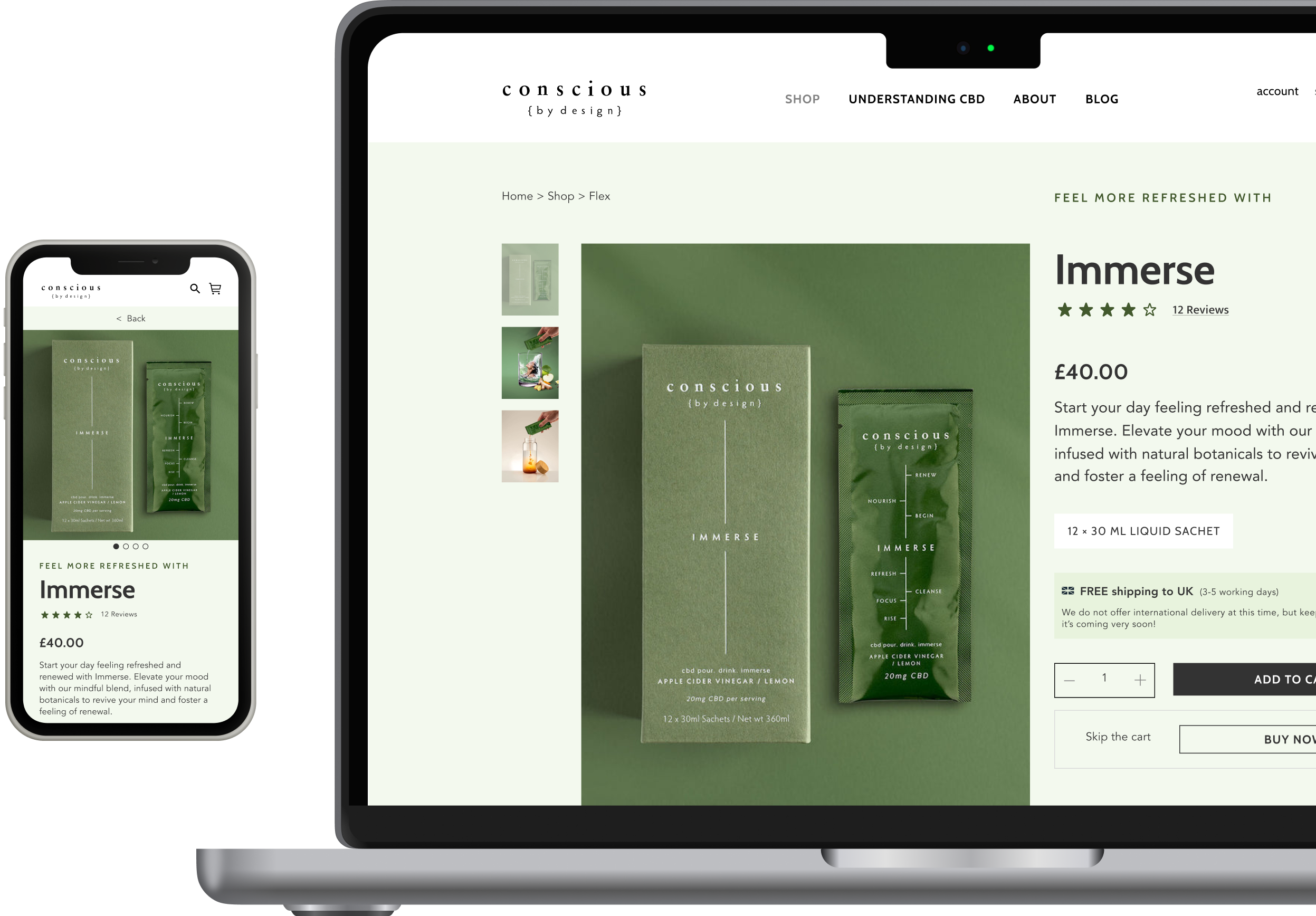
The final product was a responsive one-page UI optimized for desktops, tablets, and mobile devices, ensuring an intuitive experience across all platforms.
about The Client
Conscious {by Design} is a UK-based startup offering a novel foods product — a CBD beverage concentrate with vitamins and botanicals.
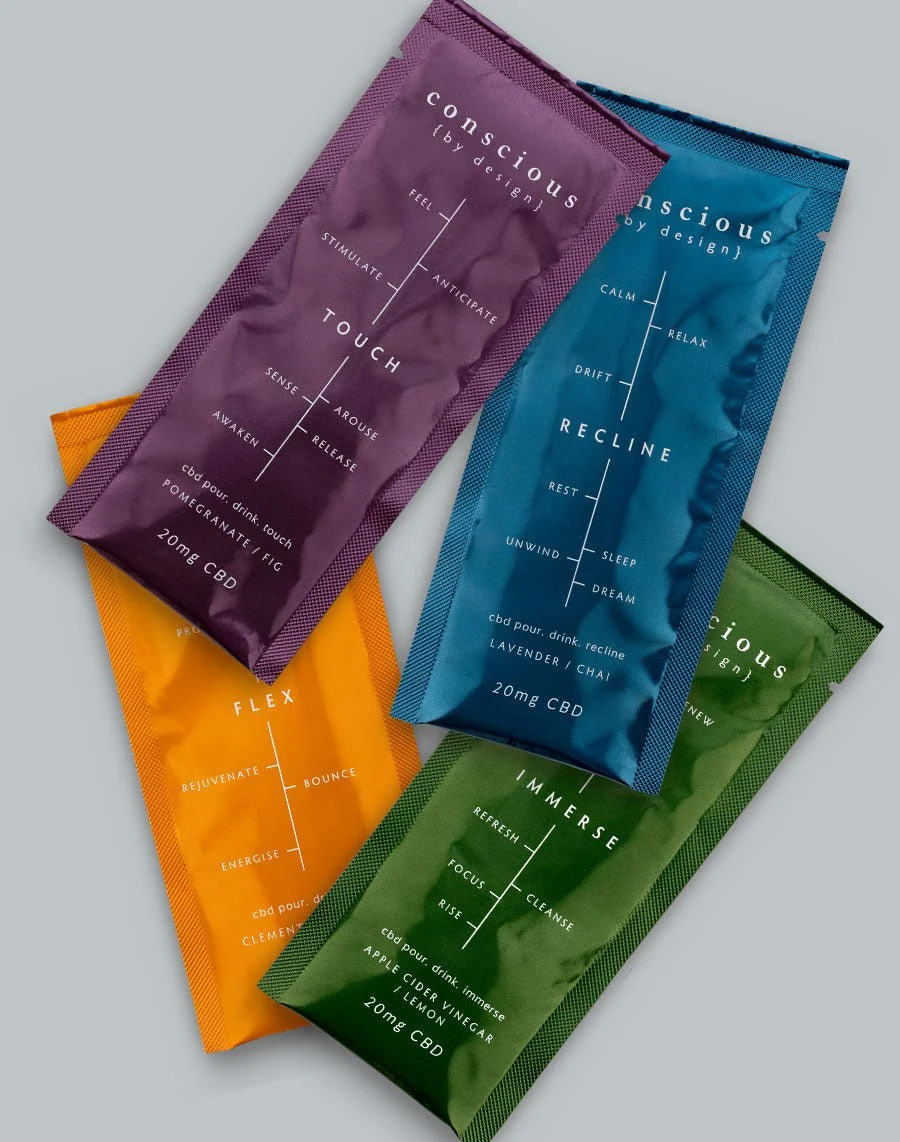
The pours sold in individual sachets (packages of 8) can be added to water, tea, or any other drink.
Four CByD (Conscious {by Design) pours address different needs and times of day: Calm, Energise, Renew, and Stimulate. The products are currently available in the UK and soon in the US.
About CBD
Wait, what is CBD?
Photo by Colin Lloyd on Unsplash
CBD, Cannabidiol, is a compound that is found in the cannabis plant. It has been used for centuries to promote better general well-being. It doesn’t appear to have any intoxicating, addictive, or other notorious side effects. It is mainly used for pain, stress, and better sleep.
Even though commercial CBD products these days are generally extracted from hemp, confusion about the differences between the hemp vs. marijuana plants meant that CBD was not commonly accepted and was illegal in most parts of the world.
However, this changed with the legalization of CBD products in 2018 in the UK, the US, and many other countries. A flourishing CBD industry was born.
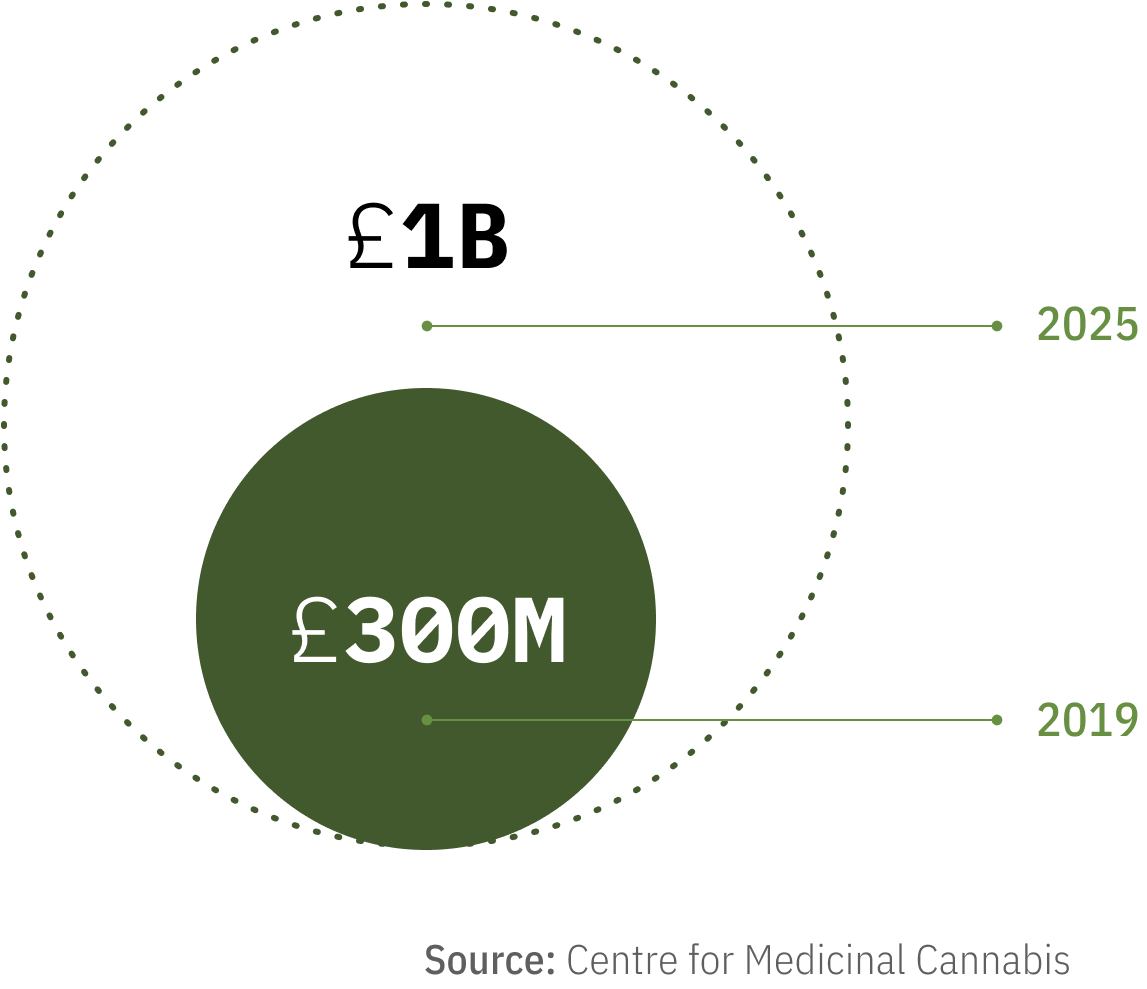
The UK CBD market
Deconstructing the novel food product problem
Business Challenges
Poor understanding of CBD
Novel food product
Food regulations
Business Goals
Increase customer comprehension and engagement with the product.
Expand into the US market.
Establish reseller partnerships to provide access to the product.
Existing Website
Market Positioning Map
Compared to the competition—CByD has a unique offering at a premium.
Even though there is competition within the CBD drinks category, Trip and OTO sell several CBD products, such as drinks, oils, and cosmetics, and neither offers a pour.
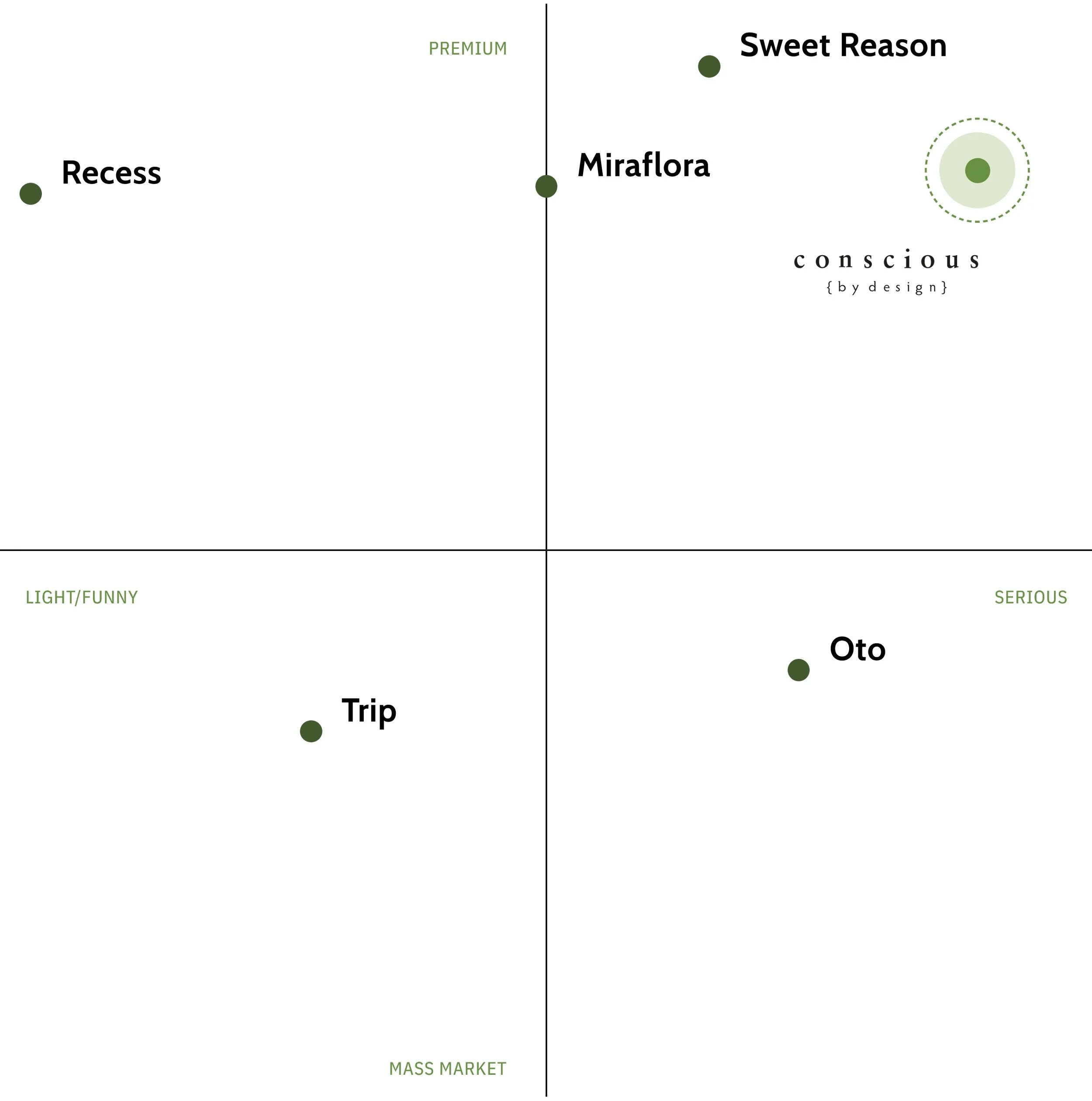
brand comparison
The CByD current website lacks some of the competition’s vital and easy-to-add features and sections.
Clear and visible information about CBD, nutrition, product benefits, and usage,
Resellers-, partnership-, and brand-ambassadors-dedicated pages,
A subscription model.
Feature comparison
Research—listening to customers
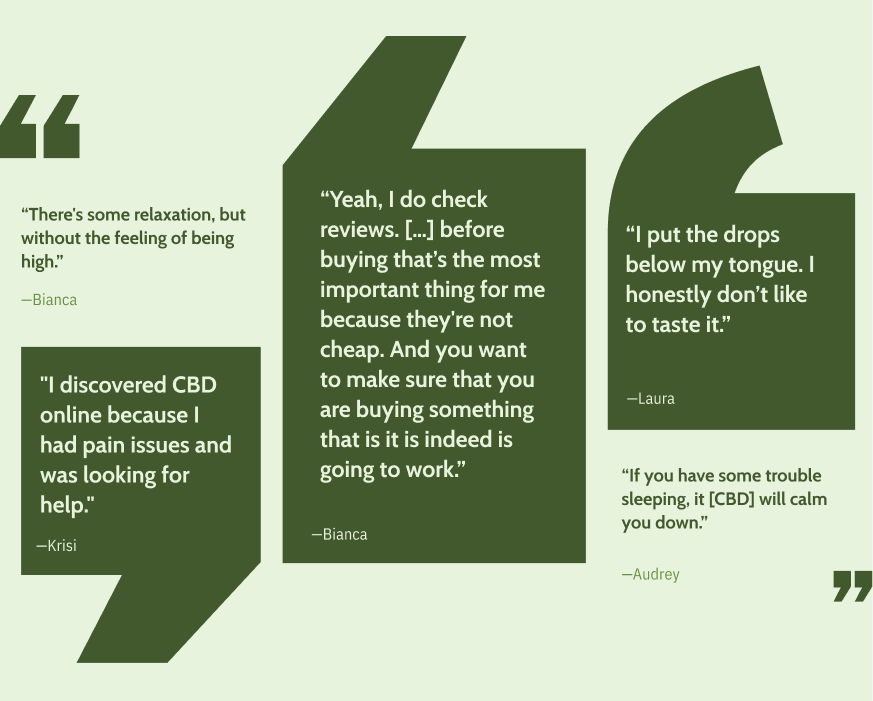
Users Interviews
Video interviews with 4 users helped us understand their common pains and motivations—for looking to falsify our general assumptions.
Who uses CByD?
Mainly women as young as 25 and as old as 40 who are busy wellness, sports, and healthcare professionals.
What did we learn?
They use CBD mainly as oil drops but don’t love the taste. They use it in an attempt to relax, to reduce stress or pain. CBD products are expensive, so customers do their due diligence of research before making a purchase. They stick to a product and brand they like and tend to restock it online.
Trends
Research insights, organized in an Affinity Diagram, brought structure to our data and uncovered trends.
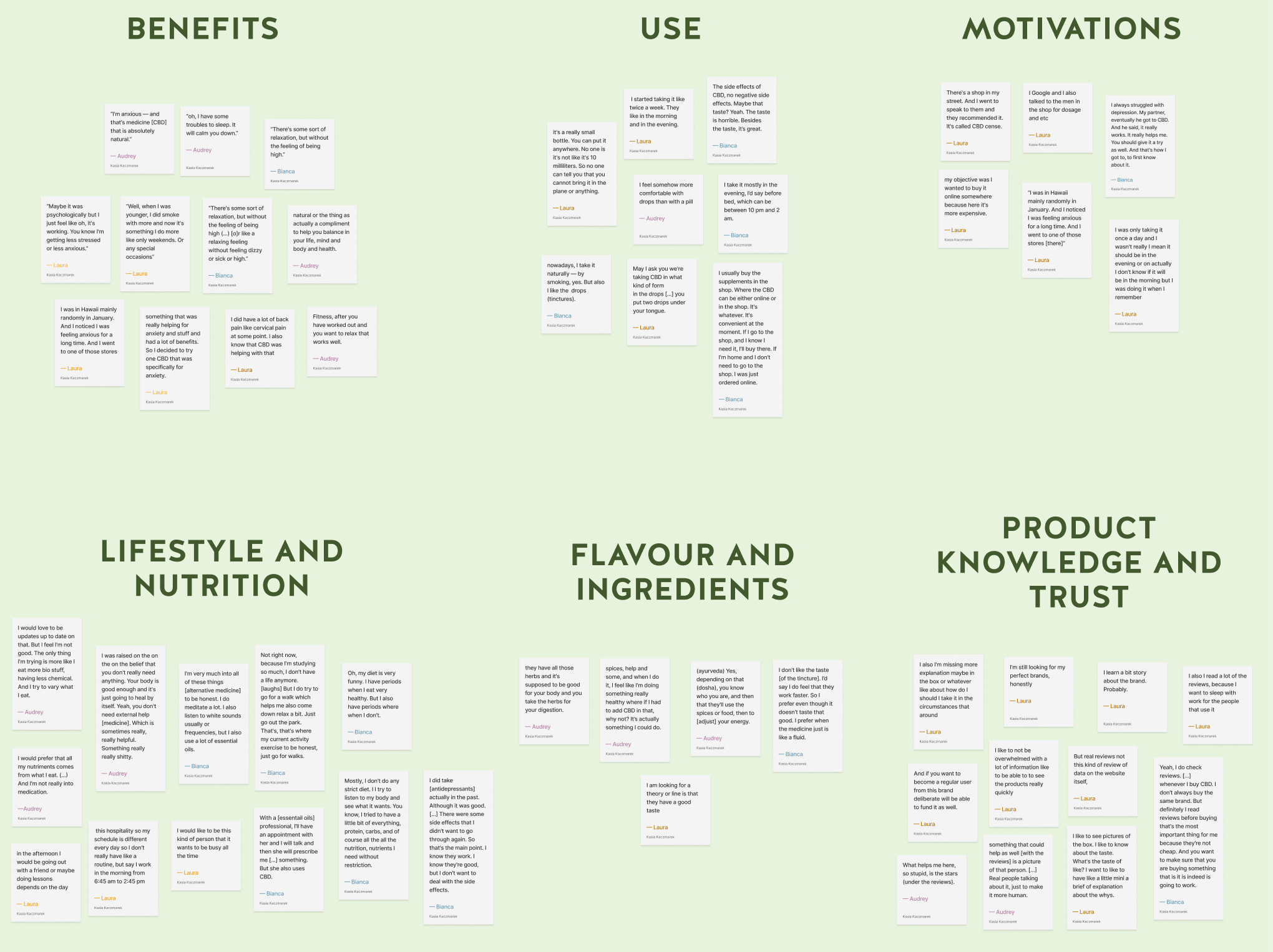
Research key insights
Education is key.
Customers need clear, credible information about CBD benefits.
Trust is everything.
Many users are cautious about trying a new product in an unfamiliar category.
Simplicity wins.
A seamless buying experience is critical for first-time users.
Combining what we learned
User Persona & User Journey
The insights from research served as a base for a User Persona and their Journey Map, which then served as a base to identify main pain points (high stress, staying focused during a hard day at work, she has little time and energy to spend with her loved ones after work), as well as opportunities for improving the website user experience.
This is Maggie
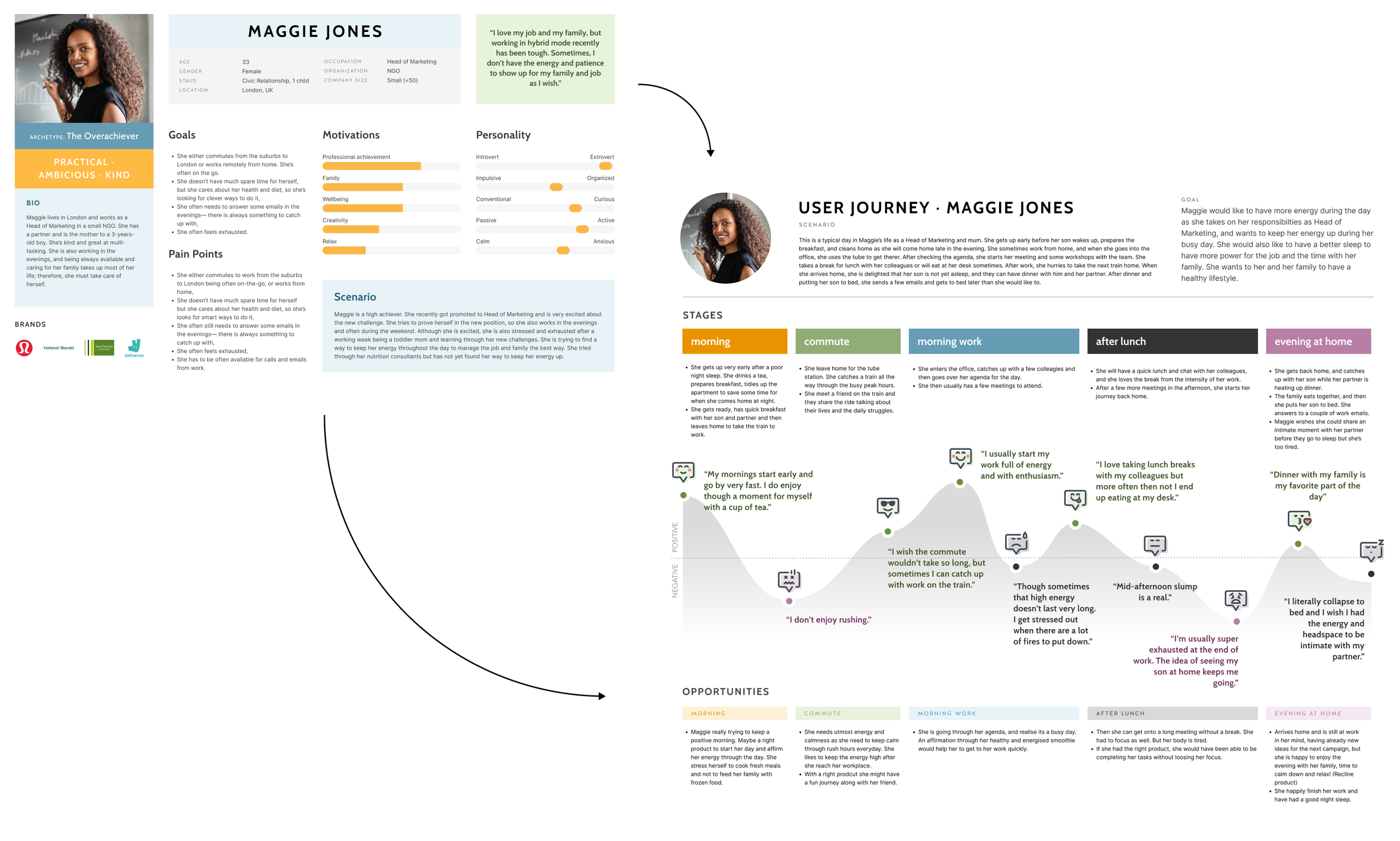
problem statement
Busy professional women—who prioritize their nutrition and well-being—require a convenient method to maintain their energy levels, reduce stress, and stay present. CbyD is a natural product that interests these women; however, comprehensive product knowledge and trust in this novel food product are necessary to make an informed decision about the ideal product for their needs.
Design
HMW
We then created these three “How Might We” statements, which helped us generate ideas for solving those problems.
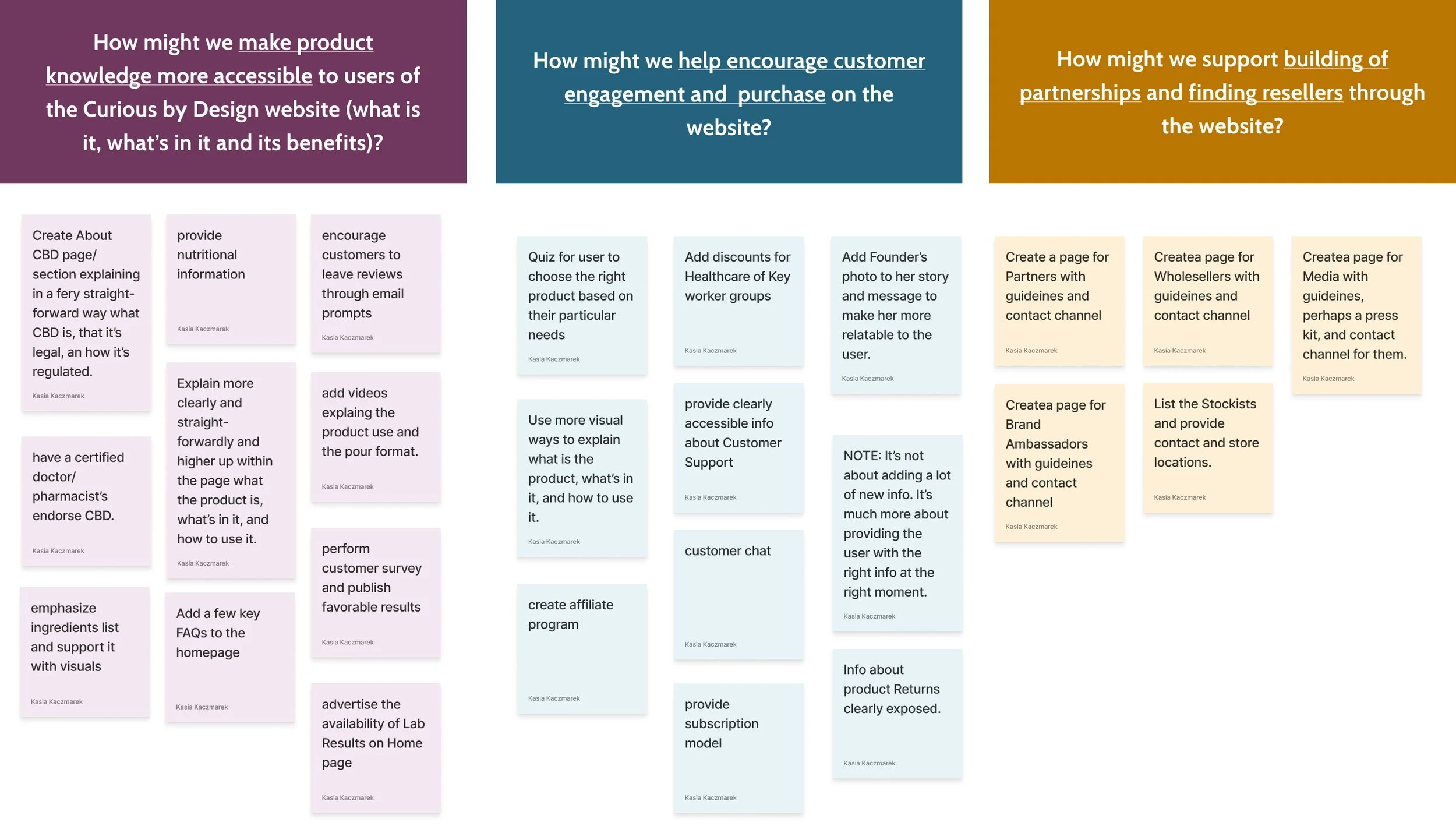
Next, the prioritization matrix (using the MoSCoW method), helped us prioritize the features and define the Minimum Viable Product Statement.
↓
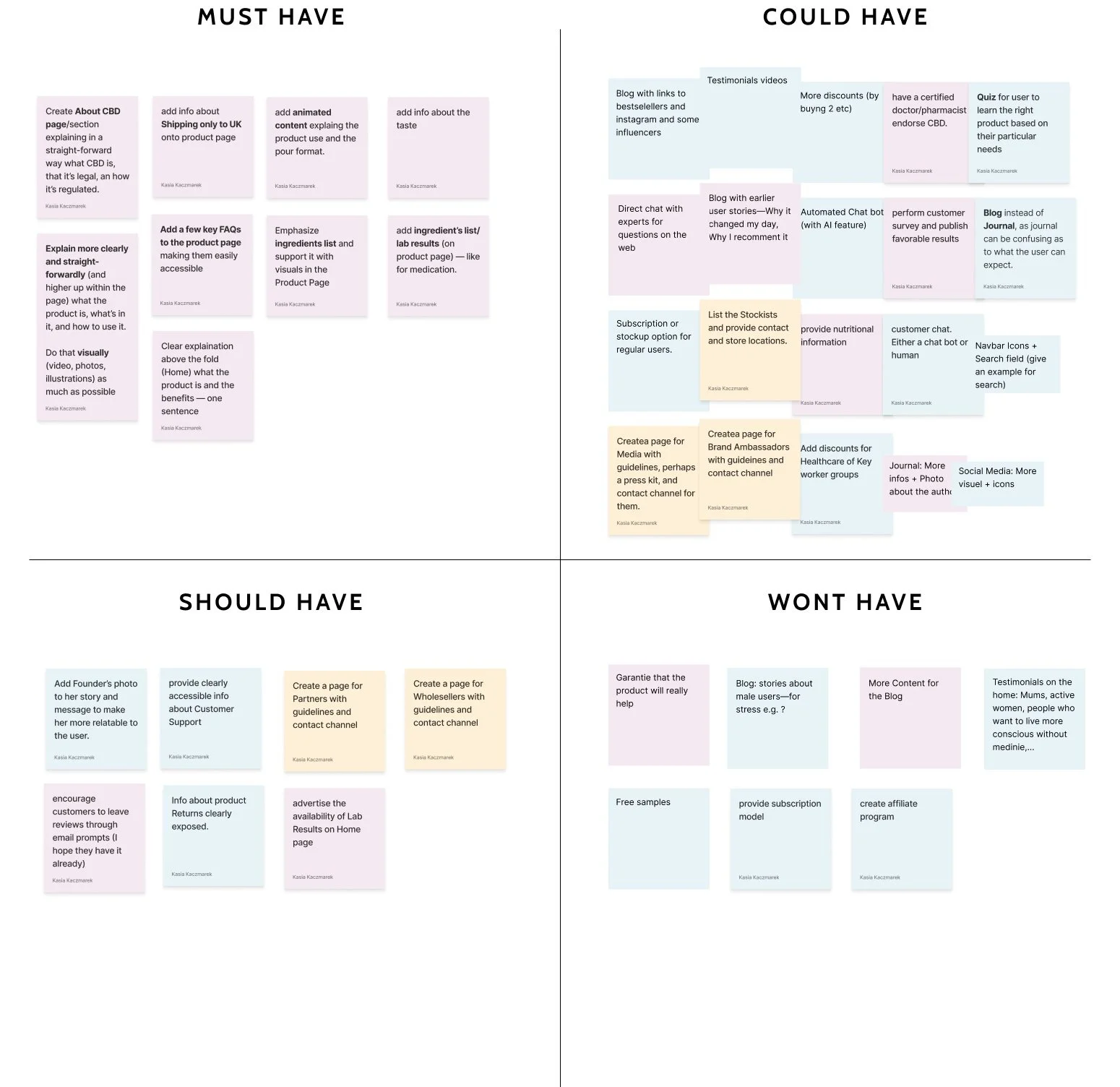
Minimum Viable Product Statement
A website that, at the bare minimum, aims to make users aware of the following:
what are the products and how to use them,
what’s in them,
what CBD is.
The website further aims to encourage customer confidence in CBD, their engagement, and purchase by showcasing the above.
Team’s goal
To provide the user with the right insights at the right moment to build their confidence and support their decision-making.
Research drives new information architecture and customer experience
User Flow
User flow to better understand the user experience.
Our user—Maggie, lands on the Conscious dy Design website, and proceeds to navigate it, while exploring the brand CBD and decides to give it a go choosing the Immerse product and completing the purchase.
from concept to launch
Building a better experience: Through multiple iterations, we refined the design to ensure every element served the user’s needs. Low-fidelity wireframes validated the structure, while high-fidelity prototypes tested visual appeal and functionality.
Concept Sketches
We built the low-fi concept sketches and, tested the idea on 2 users with some valuable feedback confirming our approach, which let us move onto Wireframing.
Build to think.
Test to Learn.
Concept Sketches
The sketches evolved into the wireframe prototype. We tested it with three more users, who provided insights on how some sections were divided and the text on buttons.
Wireframes
Visual Design
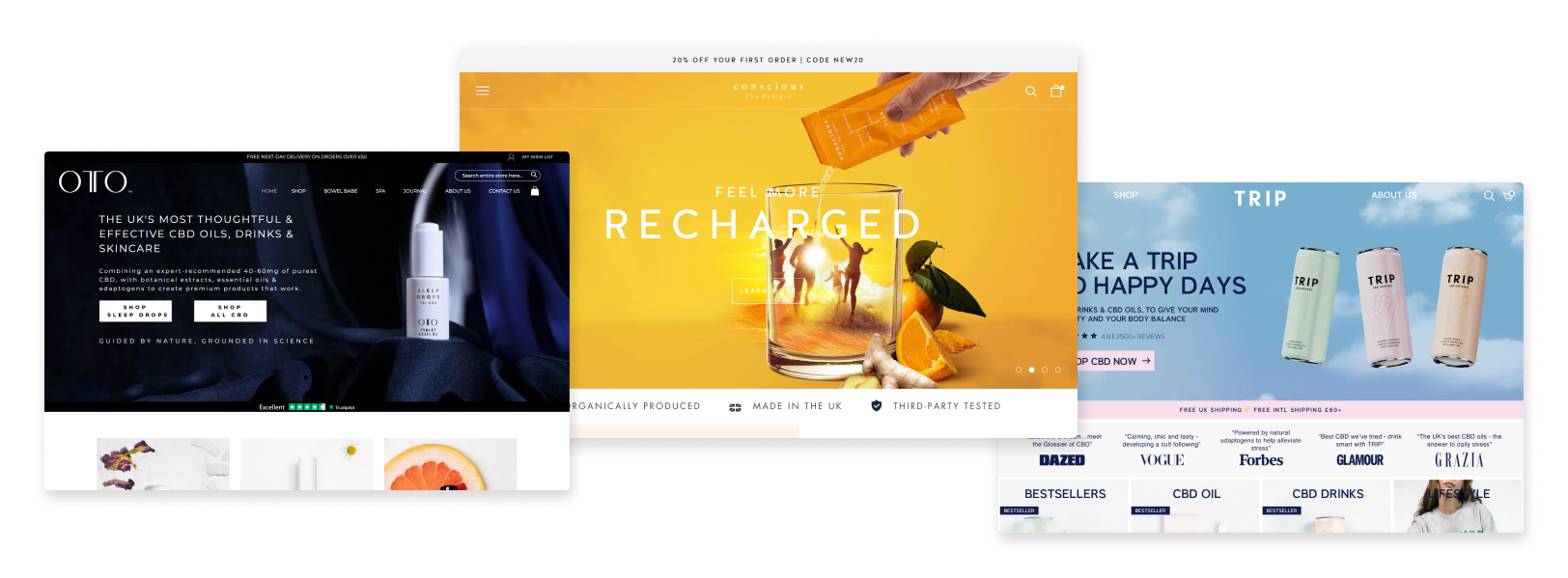
visual Competitive Analysis
We compared the visual elements of our brand with the competition in the CBD drinks category. We analyzed three competitors: Oto, Trip, and Zolt (indirect competition).
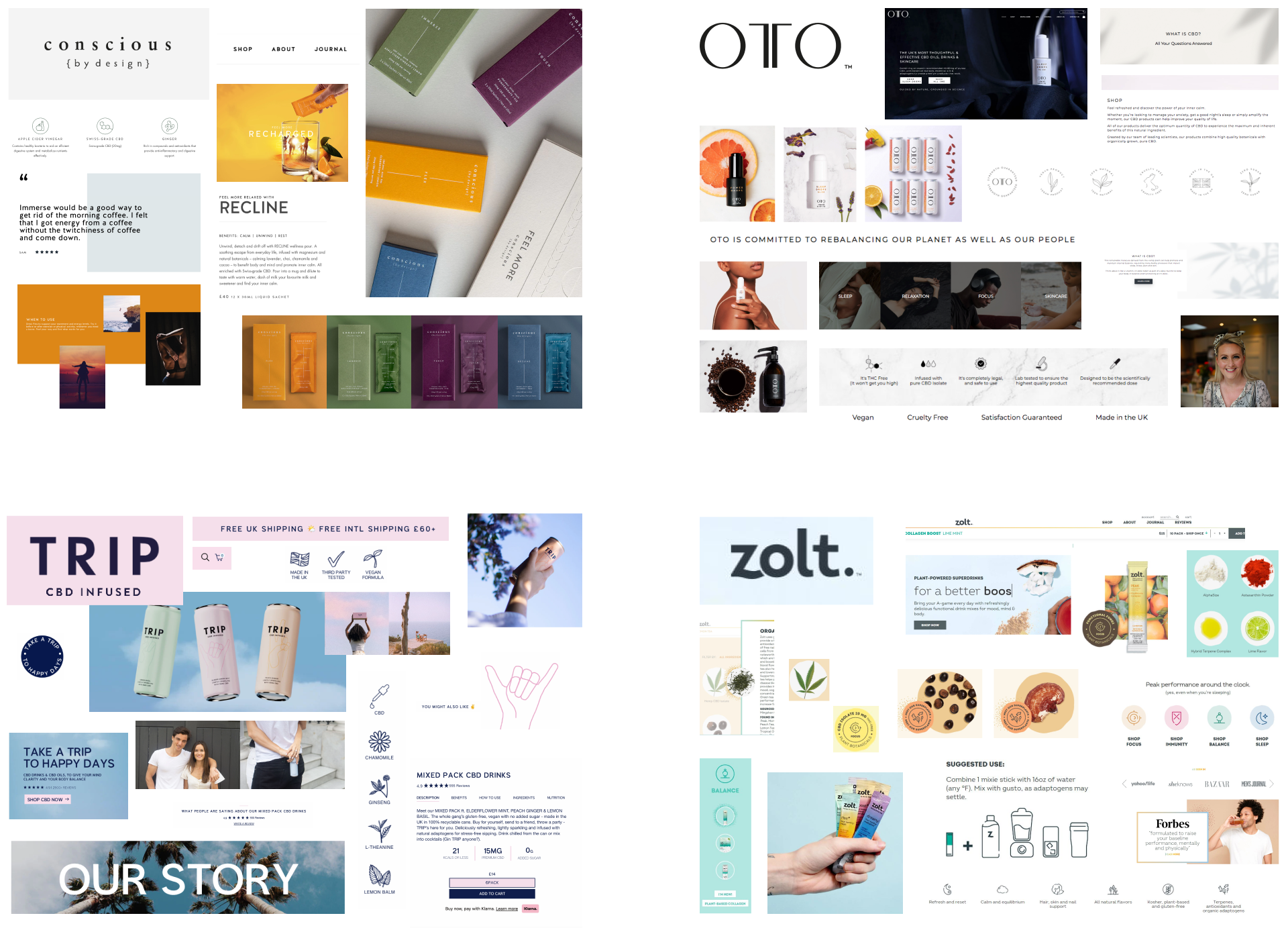
Brand Attributes and Mood Board
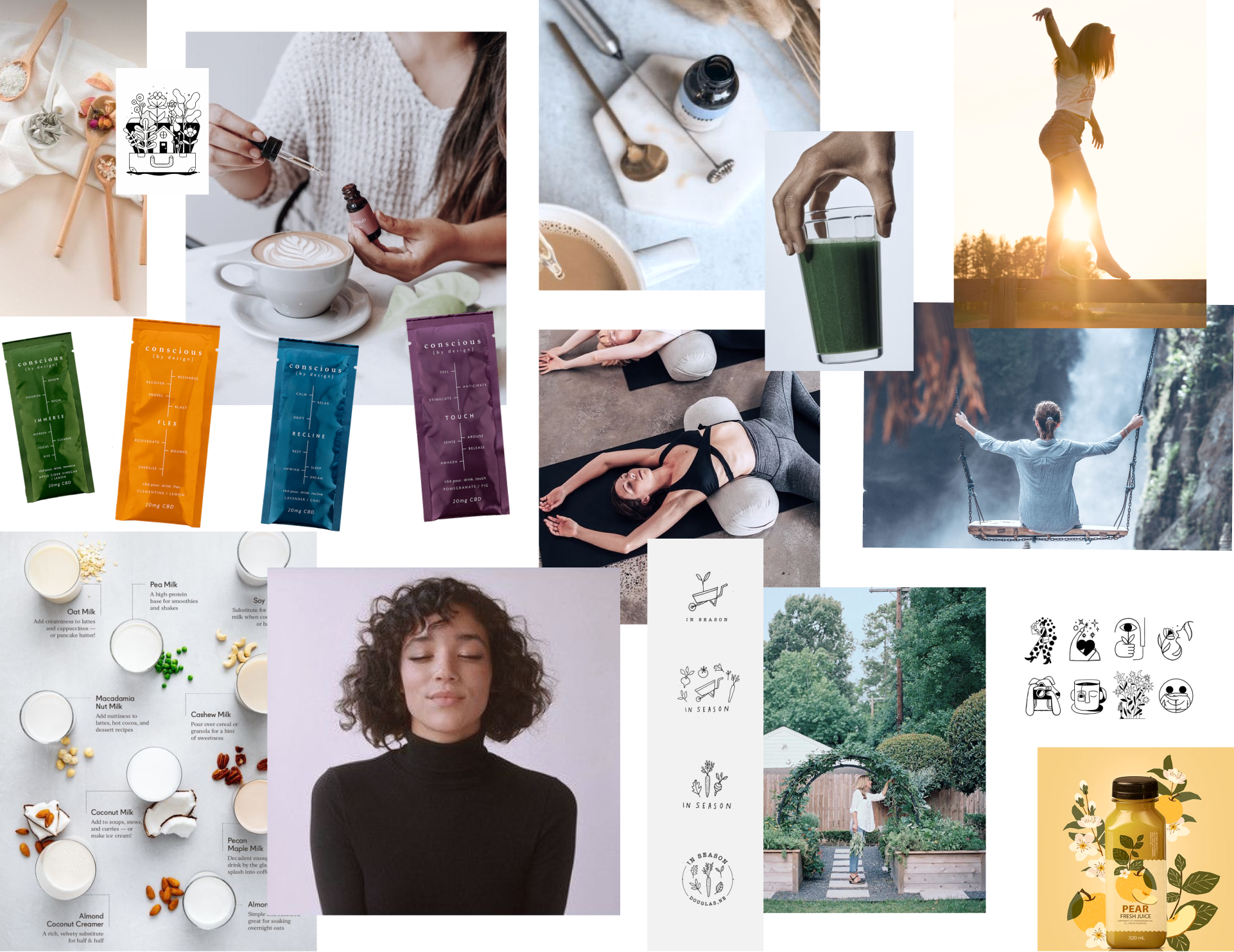
Based on brand positioning, purpose, and mission, we chose the following brand attributes and composed a mood board:
Balanced
Caring
Convenient
Organic
Sophisticated
↓
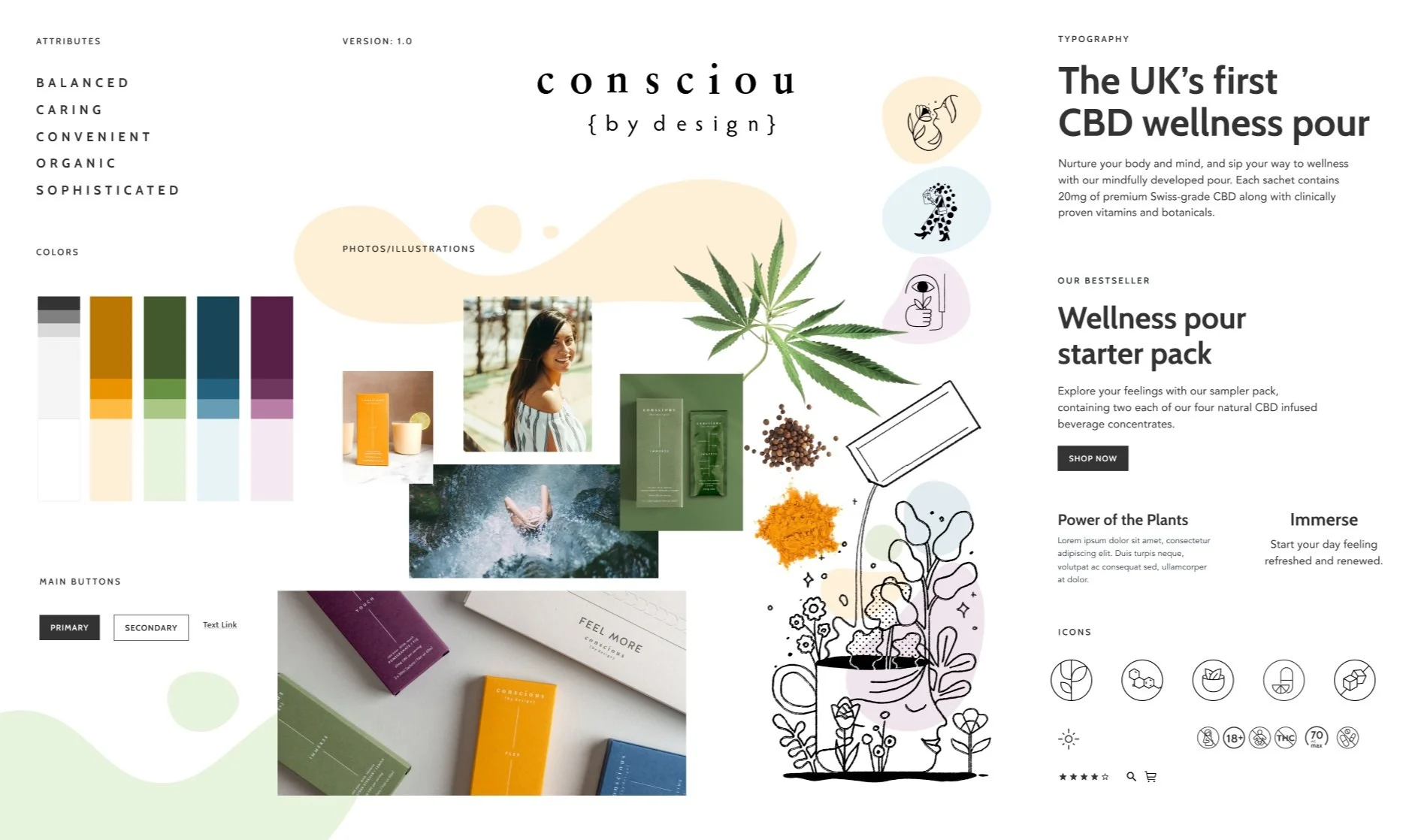
Style tiles — typography and colour palette
Rooted in wellness: the visual identity
To create a sense of calm and credibility, we embraced a soothing color palette inspired by nature, paired with clean, minimal typography. These choices reflected the product's promise of health and balance.
Desirability Testing
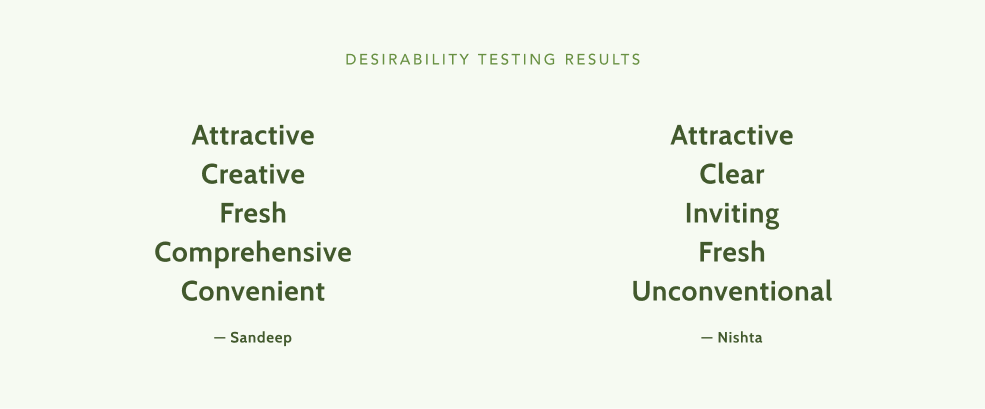
Simultaneously, we built the first comps and put together our style tiles. Once our mid-fid was ready, we tested three screens for desirability and found some satisfying results.
Prototype
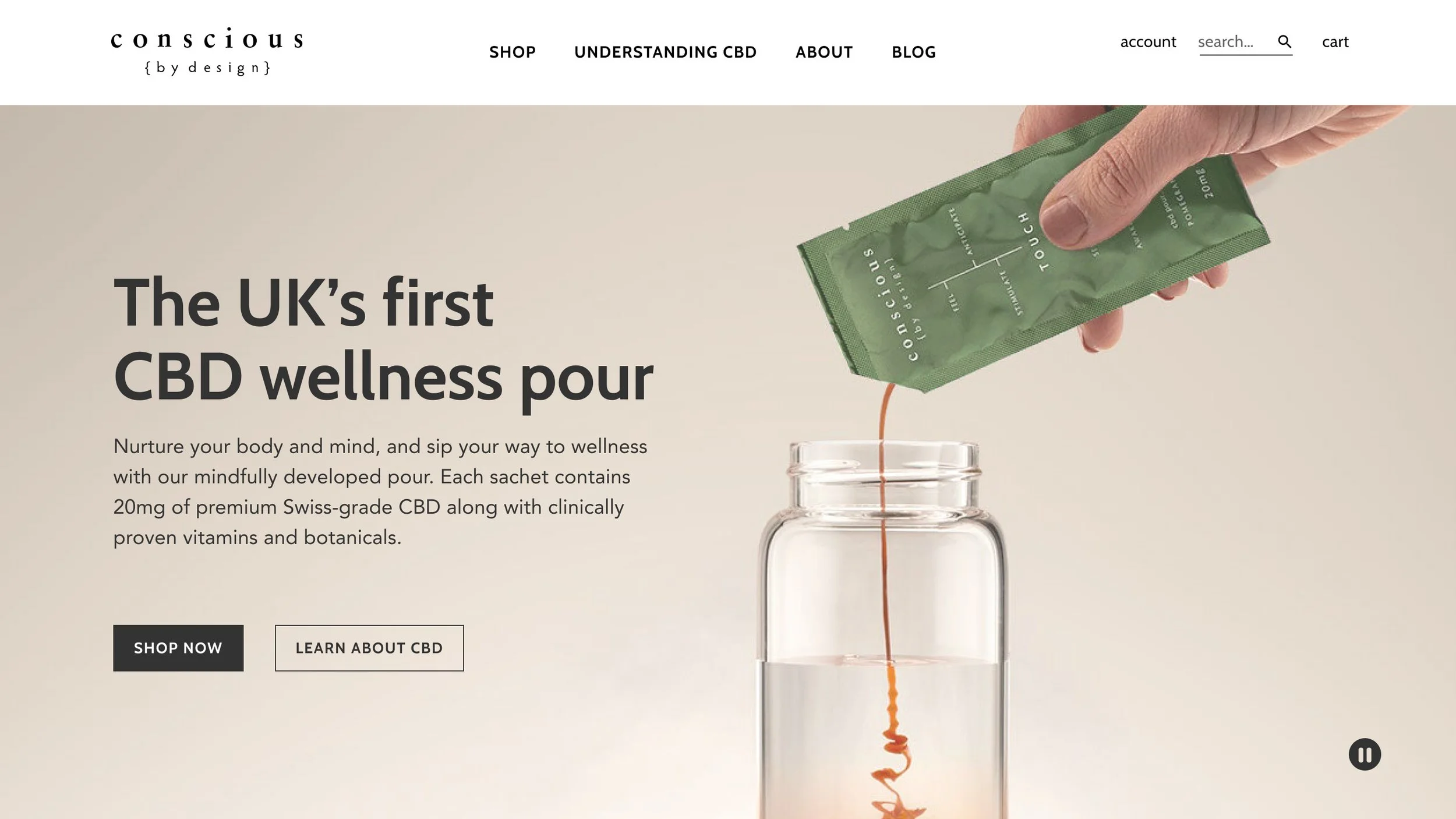
We designed responsive screens for tablet and mobile, alongside the desktop.
Usability Testing
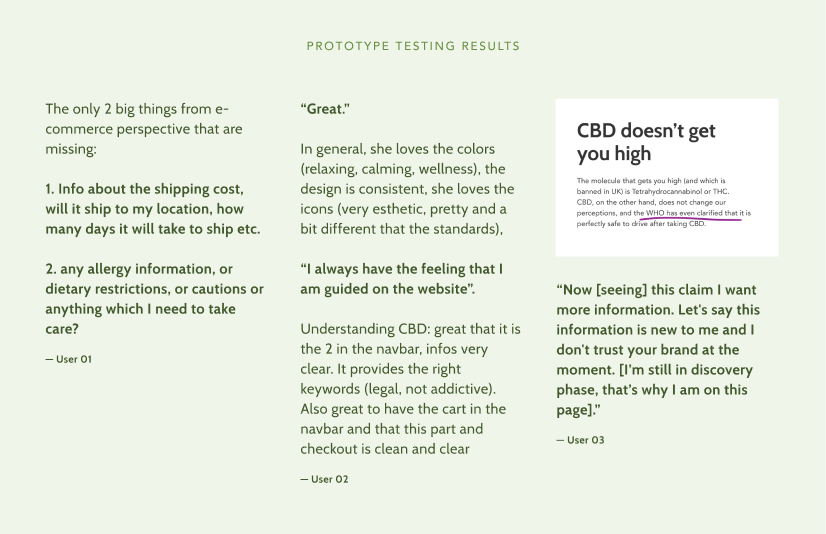
We conducted our prototype testing with three users. We asked them to find information about the product and CBD. We received some positive comments.
heatmap Testing
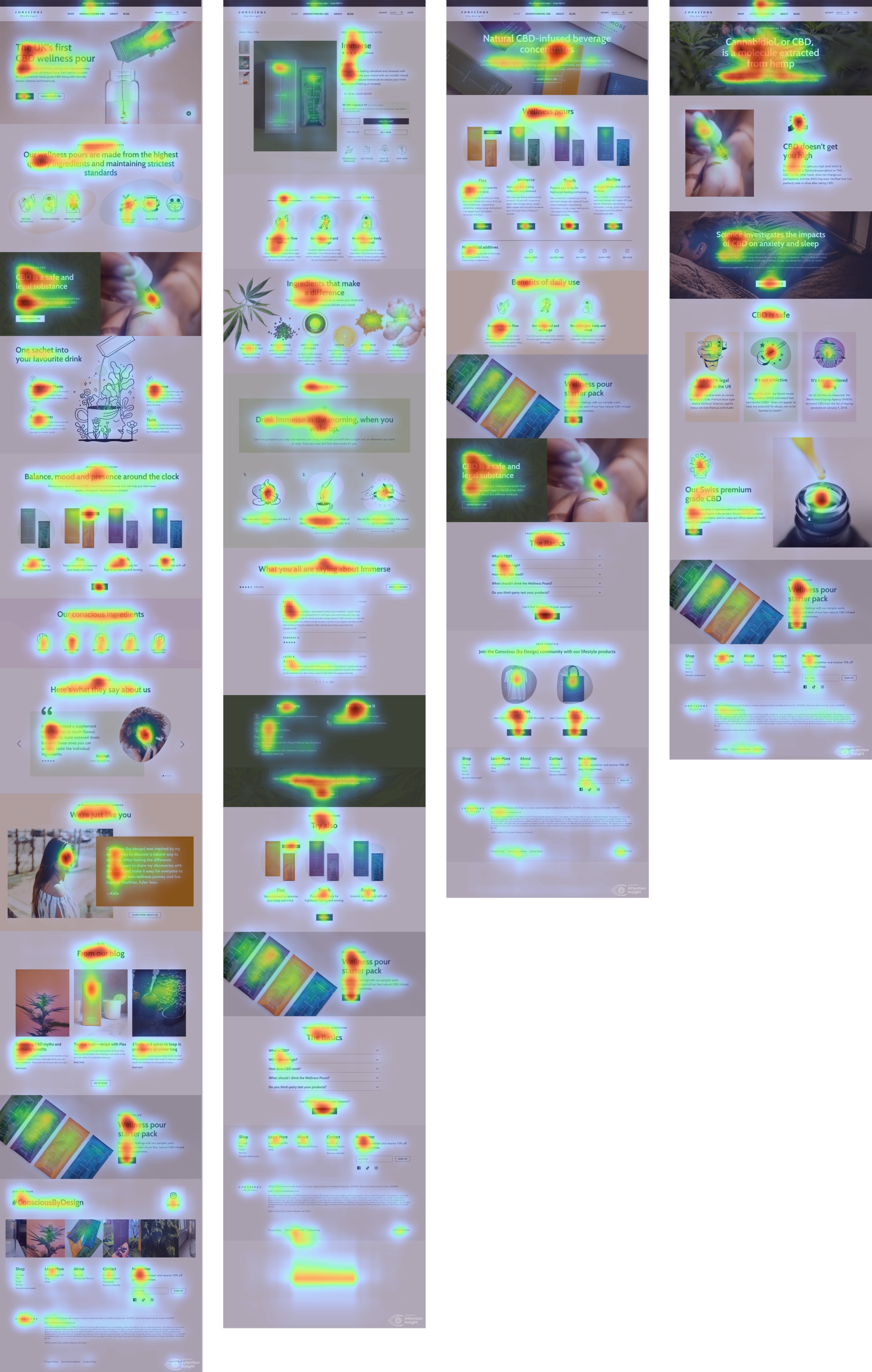
By visually representing user interactions, such as clicks, scrolls, and mouse movements, heatmaps allowed us to identify areas of high and low engagement. This data-driven approach proved invaluable in optimizing the page’s layout, ensuring that key information and calls to action were prominently displayed and easily accessible to visitors.
Key Learnings & Next Steps
Designing for a new market segment reinforced the importance of empathy and education in UX. This project challenged me to balance user needs with business goals, resulting in a design that inspires trust and drives engagement.
CBD is a pioneer and futuristic product with huge potential, so our goals are to align the sales and the audience through social media and the website.
As for the next steps:
We are looking for a collaborative approach in terms of partnerships and resellers.